Things to Do in Benin
Voodoo roots, Atlantic waves, and the best grilled goat you'll ever taste
Top Things to Do in Benin
Find activities and tours you'll actually want to do. Book through our partners -- no booking fees.

Plan Your Trip
Essential guides for timing and budgeting
Climate Guide
Best times to visit based on weather and events
View guide →Day Trips
The best excursions and nearby destinations worth the journey
Explore day trips →Where to Stay
Best neighbourhoods, hotel picks, and booking tips
Find hotels →Travel Insurance
What's required, what coverage matters, and how to get a quote
Read guide →What to Pack
Climate-specific gear, essentials, and what to leave at home
See packing list →When Should You Visit Benin?
Tap a month for weather, crowds, and highlights
View full year-round climate guide →
Your Guide to Benin
About Benin
Benin greets you with smoked fish drifting along Rue du Commerce in Cotonou. Money changers squat on stools. Motorbikes dodge pineapple pyramids taller than you. Contradictions sit shoulder to shoulder here. The Python Temple in Ouidah stands 300 meters from a Catholic basilica. Families pour libations on Friday night.
Same families fill church pews on Sunday. Dantokpa Market seethes from 6 AM until midnight when generators die. Hand over 200 CFA ($0.33) for bitterleaf. Pay 500 CFA ($0.83) for akassa that tastes like sourdough porridge. In Ganvié, the stilt village on Lake Nokoué, children paddle canoes to school. They glide past floating lettuce gardens.
Back in Cotonou, Fidjrosse Beach bars serve cold beers and grilled fish. Afrobeat thumps until 3 AM. Roads between cities will shake your molars loose. The Cotonou to Bohicon stretch feels like driving over a washboard. Villages sell the best kuli-kuli for 100 CFA ($0.17). Smiles cost nothing. Travel here is rough. It is also honest.
Sacred and profane share the same sidewalk. A broken French chat can end with dinner at someone's home.
Travel Tips
Transportation: Zemidjans own Cotonou. Motorcycle taxis swarm the streets. Haggle 300-500 CFA ($0.50-$0.83) for short hops. Fix the price before you swing a leg over. Blue-white taxis charge 1,500 CFA ($2.50) for shared city runs. Drivers love to triple the fare for tourists. Confort Lines buses to Porto-Novo leave every 30 minutes. Ticket is 1,000 CFA ($1.67). Bush taxis to Ouidah cost 2,000 CFA ($3.33). They depart only when every seat is filled. Download Gozem. It is Uber on two wheels. Works in Cotonou and Abomey. Saves wild hand signals.
Money: CFA francs are locked to the euro. Prices stay steady. ATMs are moody beasts. Société Générale in Cotonou's Haie Vive plays nice with foreign cards. Machines at Dantokpa Market often spit your card back. Keep 5,000 CFA ($8.33) in small notes. Zemidjans and market snacks demand change. Vendors swear they cannot break 10,000 CFA for a 200 CFA buy. Credit cards work at big Fidjrosse Beach hotels. The woman grilling corn by the airport wants cash only. Hotel du Lac offers fair exchange rates. Money changers near Grand Marché give better euro deals.
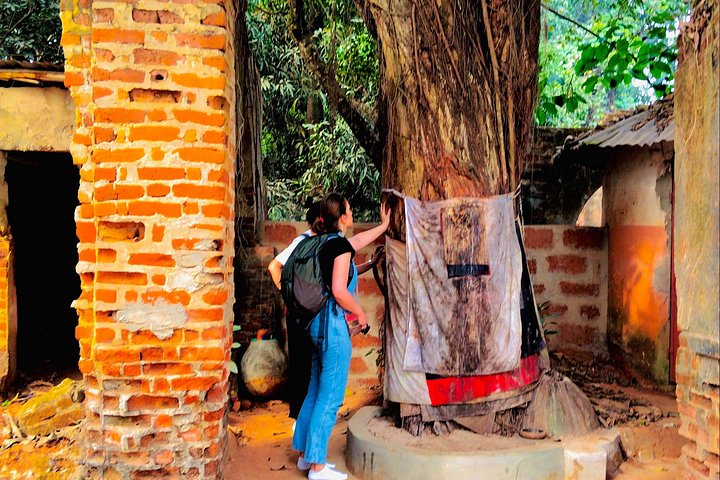
Cultural Respect: Ouidah's Sacred Forest shrines hate cameras without permission. Ask the guide. Drop 1,000 CFA ($1.67) in the donation box. Stories replace side-eye. Sunday mornings belong to churches. Market stalls open late. Get your akassa fix on Saturday. Visiting villages? Bring kola nuts or local gin. Refusing food offends. Memorize 'petit peu' (just a little). Python priests at Ouidah Temple charge 2,000 CFA ($3.33) for photos. The snakes are alive. They eat live chickens daily at 4 PM.
Food Safety: That sizzling street meat on Rue des Cheminots? Beef is safe. Skip mayo in humid months. Unrefrigerated eggs spoil fast. Hunt for stalls wrapping yam fufu in newspaper. Watch for bubbling peanut sauce. If locals queue, join them. Fidjrosse Beach fish hits the grill at noon. Barracuda sells until it runs out. Whole fish costs 2,000 CFA ($3.33). It swam that morning. Bottled water runs 200 CFA ($0.33) everywhere. Bagged 'pure water' costs 50 CFA. Works on a budget. Insider tip: the akassa lady near Dantokpa's fabric section uses filtered water. She serves in enamel bowls washed for 20 years. Regulars swear by her.
When to Visit
December through February is Benin's golden window. Thermometers rest at 30°C (86°F). Harmattan wind scrubs humidity. Skies glow cobalt. These are peak months. Cotonou hotels increase 40%. Fidjrosse beach bars mimic Lagos on holiday. March to May turns savage. Heat climbs to 35°C (95°F). Air sticks to skin. Room prices drop 25%.
You will share Pendjari National Park with elephants alone. June ushers in rains. Dirt roads dissolve into mud. July and August drench daily. Plans can wash away. Countryside flares emerald green. Prices bottom out. Rooms that cost 15,000 CFA ($25) in January fall to 8,000 CFA ($13.33). September to November has a second dry spell.
Temperatures hover at 28°C (82°F). Window is brief and fickle. Voodoo Festival hits Ouidah on January 10th. Thousands arrive. Hotels double rates. Parades sear into memory. Wildlife photographers target March to May. Grass stays short. Elephants crowd waterholes. You will soak three shirts daily. Budget travelers should book September or October.
Rains taper. Prices stay low. Post-harvest village festivals deliver real culture minus tour buses.
More Ways to Experience Benin
Tours, day trips, and local experiences curated by on-the-ground operators.
Didn't see anything interesting yet?
Browse Viator's full catalog of tours, day trips, food experiences, and private guides in Benin.
See All Benin Tours on Viator